Youth Work
A Minimal & Functional
Youth Work Concept
for everyone
Tools:
Circus & Performing • Politics & Politician • Media Literacy
Erasmus+ Small Scale Partnership
Project Number 2024-1-AT01-KA210-YOU-000245743
Funded by the European Union. Views and opinions expressed are however those of the author(s) only and do not necessarily reflect those of the European Union or OeAD-GmbH. Neither the European Union nor the granting authority can be held responsible for them.
Activities for
young people
16 to 29
Erasmus+ Small Scale Partnership
Project Number 2024-1-AT01-KA210-YOU-000245743
Part A: Circus & Performing
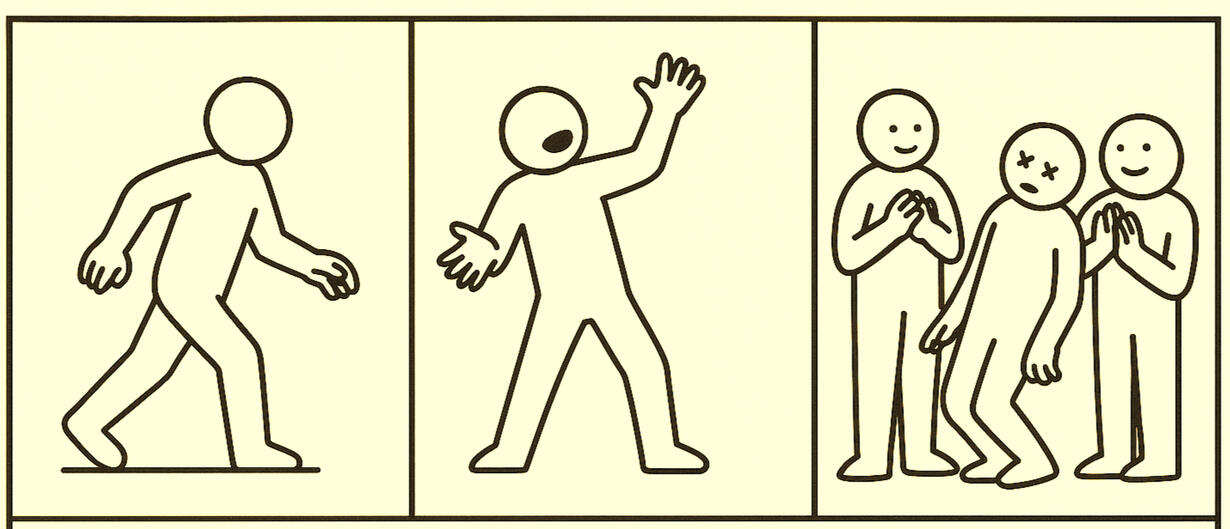
Overdramatic Intro
Materials:
None
Steps:
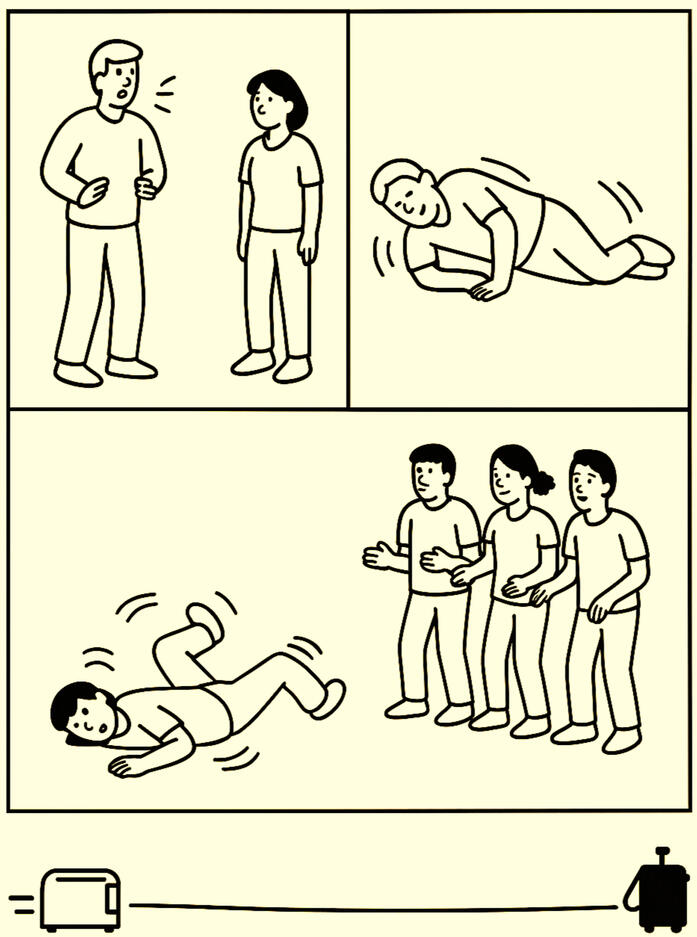
- One by one, participants step forward dramatically.
- They announce an absurd talent in exaggerated style.
- The group reacts with applause, gasps, fainting.
Tips:
Keep rhythm fast. Encourage absurdity. Don’t let anyone freeze too long.
Outcomes:
Energy, openness, quick bonding.Time:
30 minutes
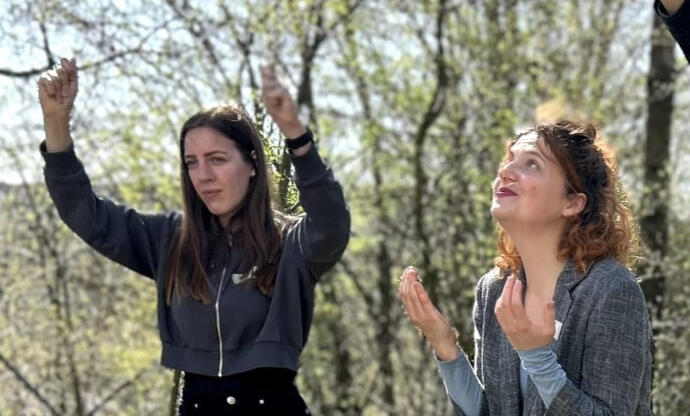
Alien Personality
Materials:
None
Steps:
- Each invents an alien character.
- They act alien for a few seconds.
- The group nods seriously in response.
Tips:
Encourage strange gestures and sounds.
Outcomes:
Creativity, humor, reduced barriers.Time:
30 minutes
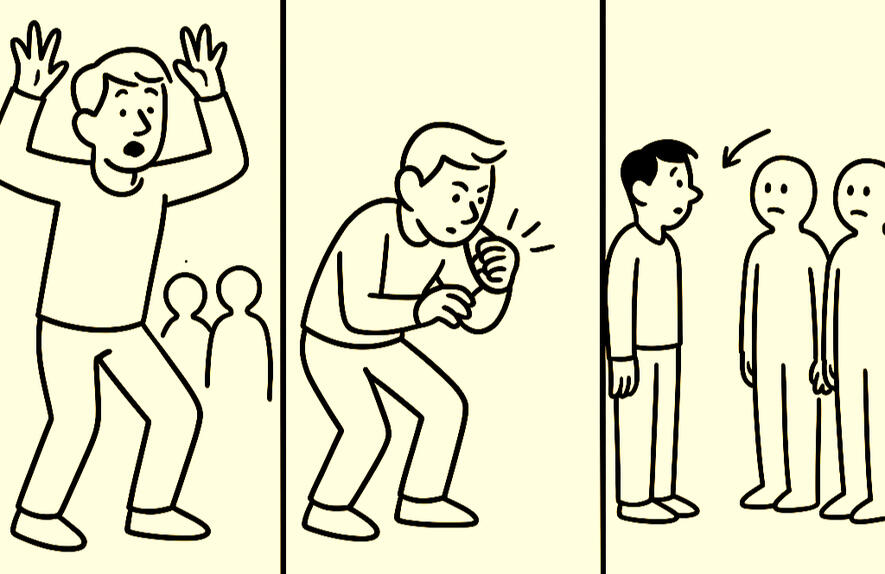
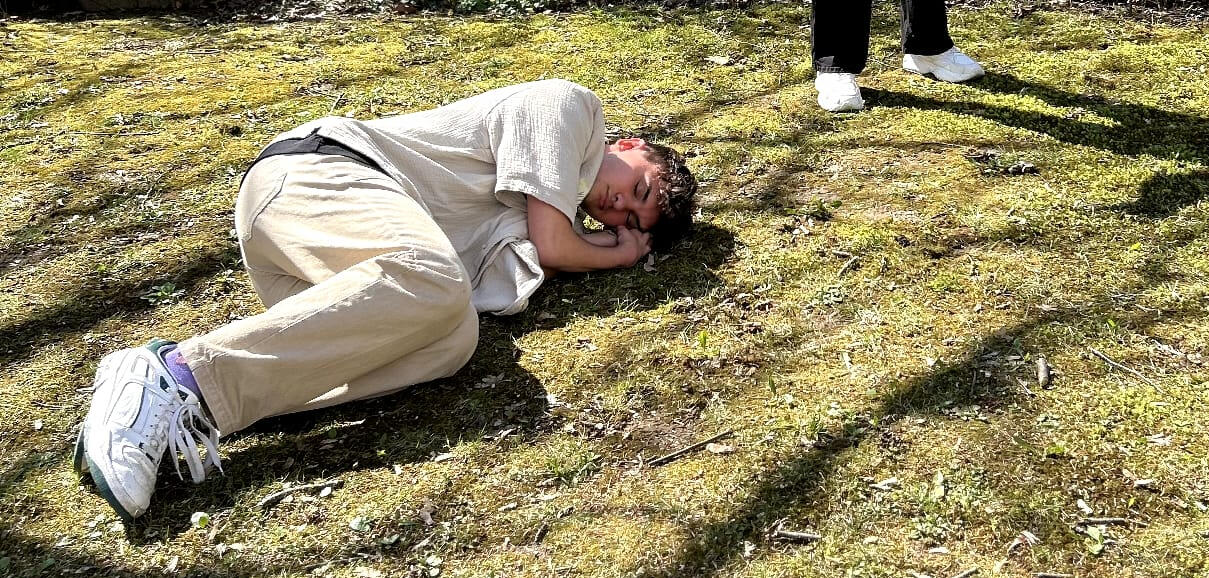
Electrical Device Personality
Materials:
None
Steps:
- Each picks a device (toaster, washing machine, vacuum, smartphone).
- They act it out with sounds and movement.
- The group imitates in chorus.
Tips:
Ask for surreal scenes (toaster shooting toast, washing machine rolling).
Outcomes:
Playfulness, imagination, group cohesion.Time:
30 minutes
Juggling Balls
Materials:
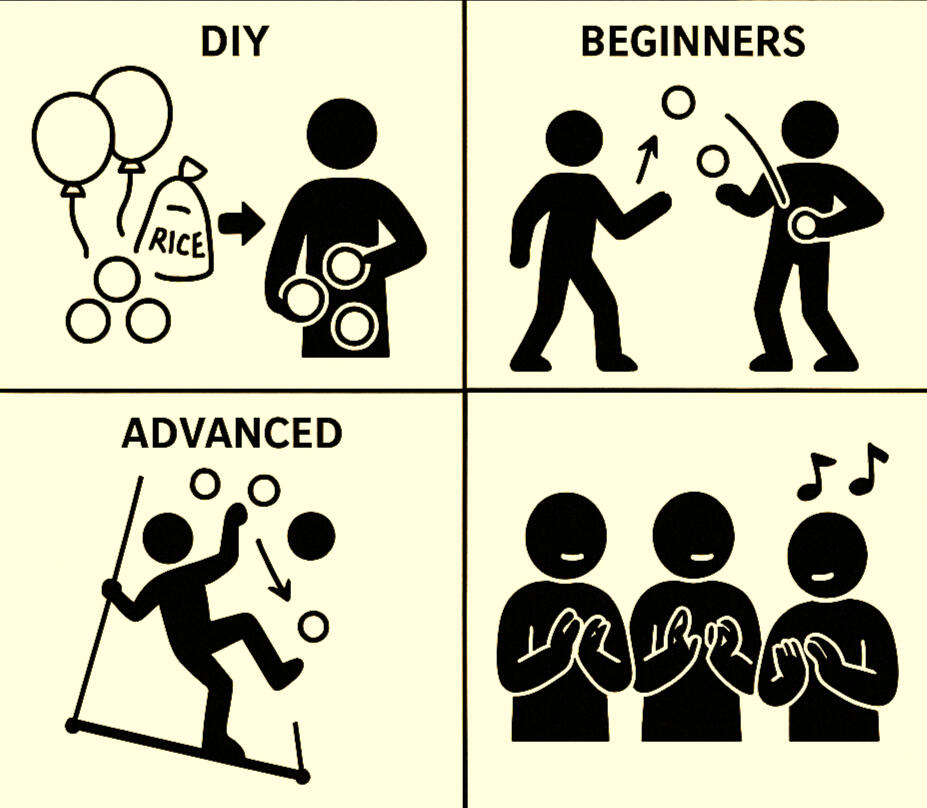
3 balloons, rice, tape, scissors
Steps:
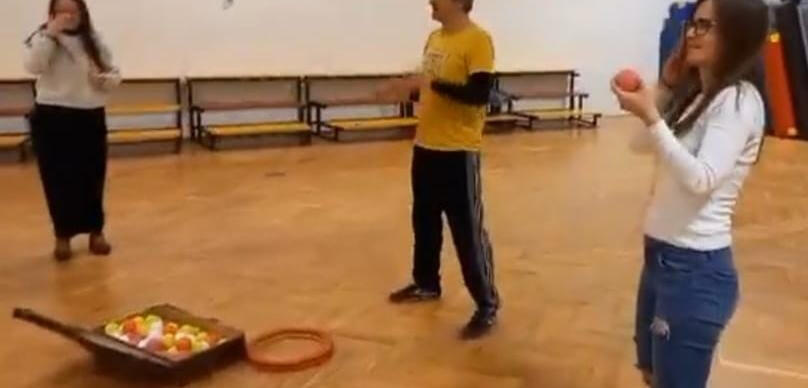
- Cut and fill balloon with rice.
- Tie and wrap balloon to make a ball.
- Juggle 1 → 2 → 3 balls.
Tips:
Remind: dropping = progress. Encourage laughter at mistakes.
Outcomes:
Coordination, focus, resilience.Time:
60 minutes
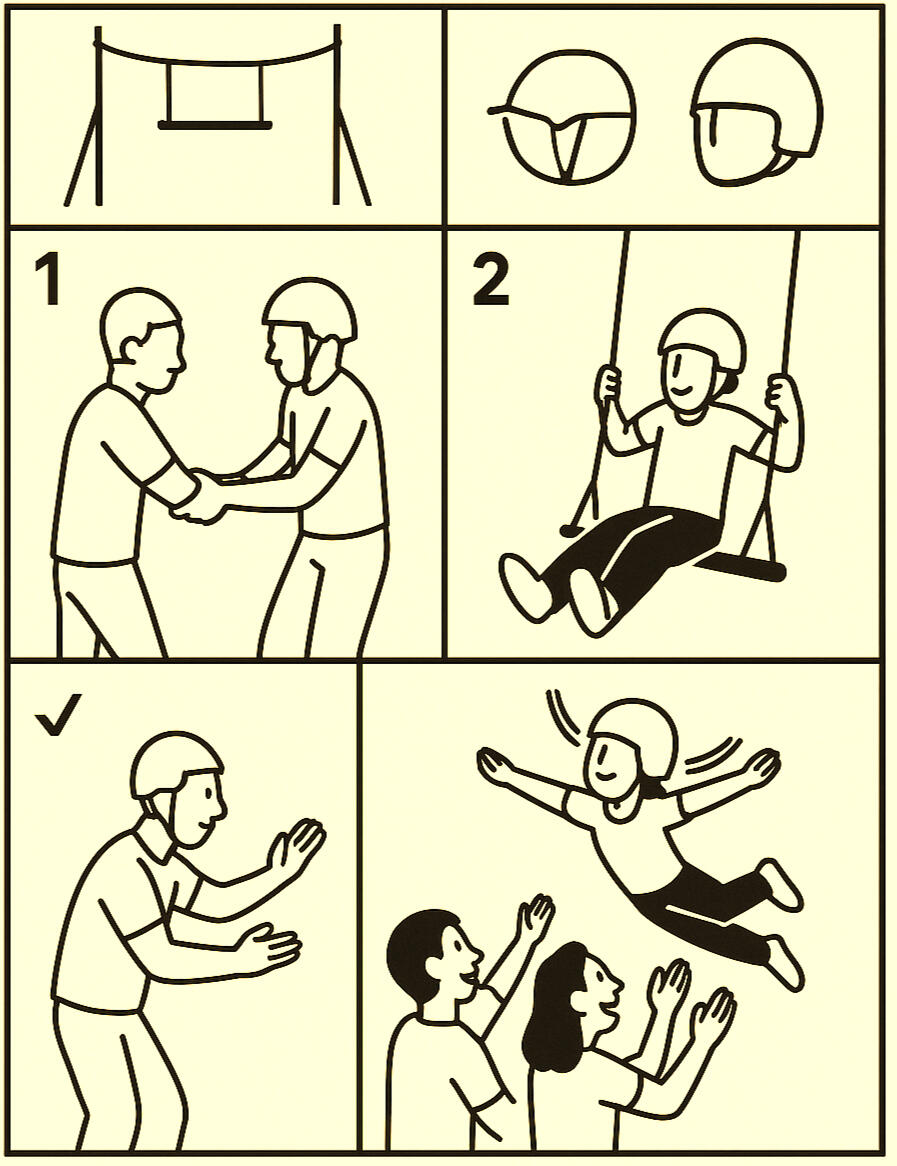
Trapeze
Materials:
Rope or bar fixed low to the ground
Steps:
- Set up trapeze close to the ground.
- Participant holds and balances carefully.
- Others cheer and clap.
Tips:
Keep it safe and low.
Pair advanced with beginners.
Outcomes:
Balance, focus, confidence.
Time:
30 minutes
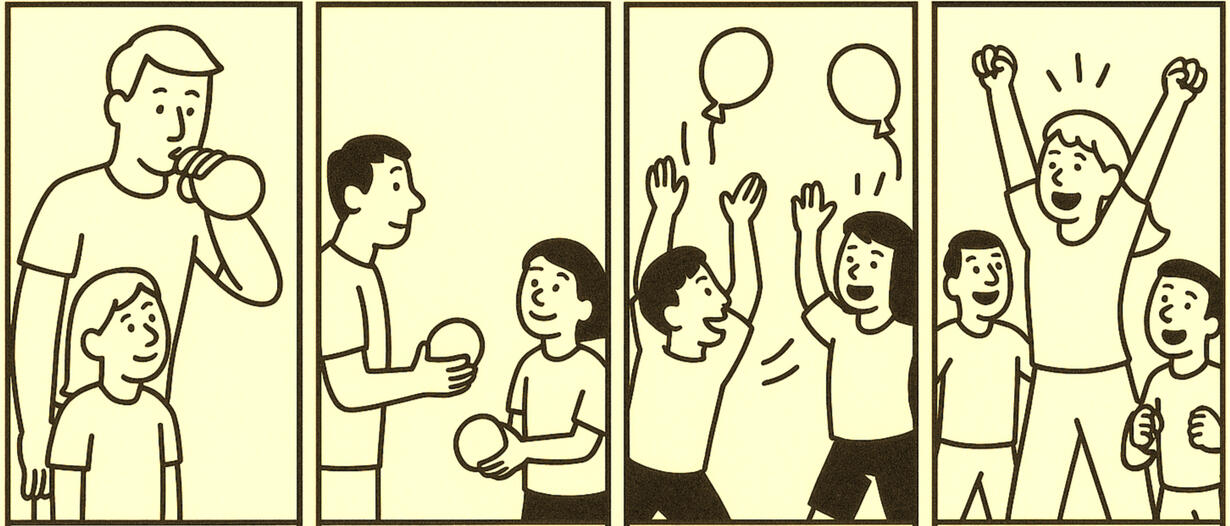
Balloons

Materials:
Balloons
Steps:
- Inflate balloon
- Group keeps balloons in the air together.
Tips:
Add music to raise energy.
Outcomes:
Energy, playfulness, group spirit.Time:
30 minutes
Erasmus+ Small Scale Partnership
Project Number 2024-1-AT01-KA210-YOU-000245743
Part B: Politics & Politician
Cube Debate
Materials:
Paper cube with topics, pens
Steps:
- Cut and fold cube with topics.
- Roll cube to get a topic.
- Teams prepare arguments and discuss.
Tips:
Keep topics short and fun (e.g., Should homework be banned?).
Outcomes:
Critical thinking, speaking, debating.Time:
30 minutes

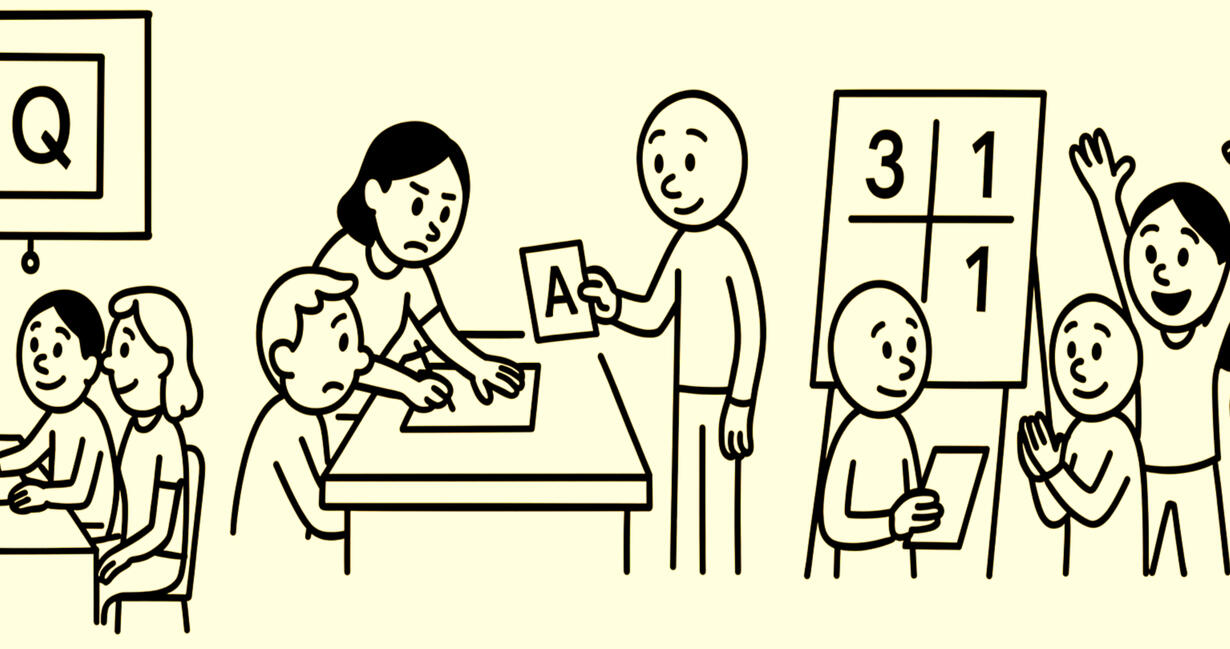
Pub Quiz
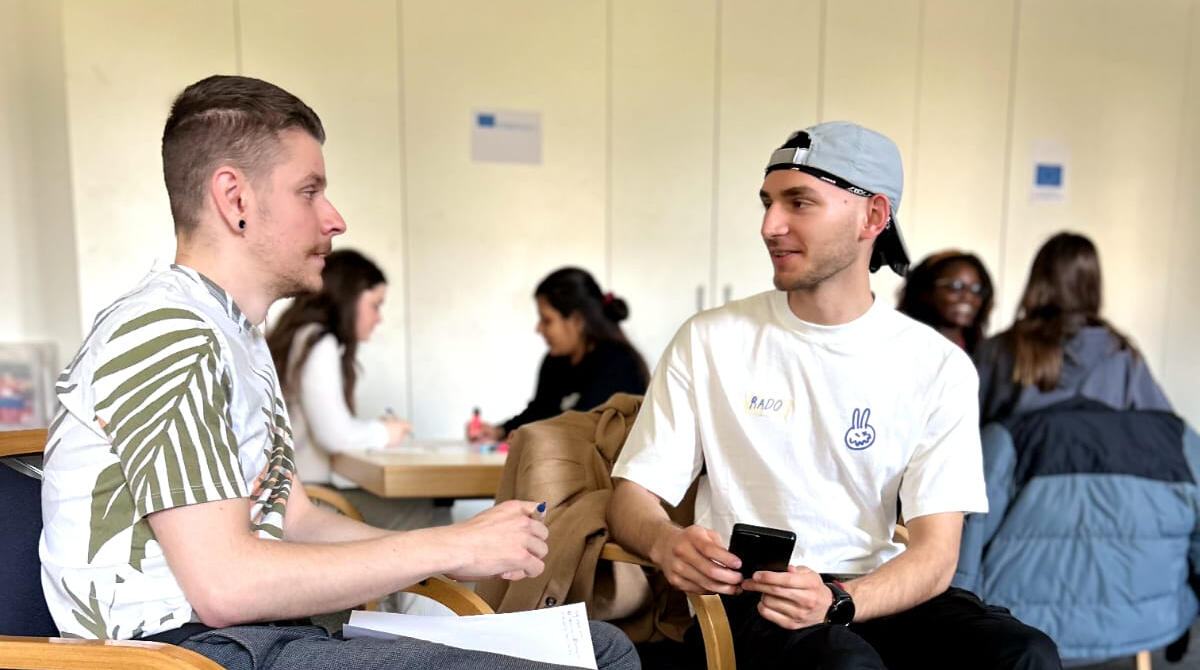
Materials:
Tables, chairs, quiz sheets, pens, projector or printed questions.
Steps:
- Divide participants into teams.
- Present questions round by round
- Teams discuss and write answers.
- Collect and check answers
- Announce scores and winners.
Tips:
Keep questions varied in difficulty and topics. Maintain clear timing.
Outcomes:
Teamwork, general knowledge on politics and related topics, communication, friendly competition.Time:
60 minutes
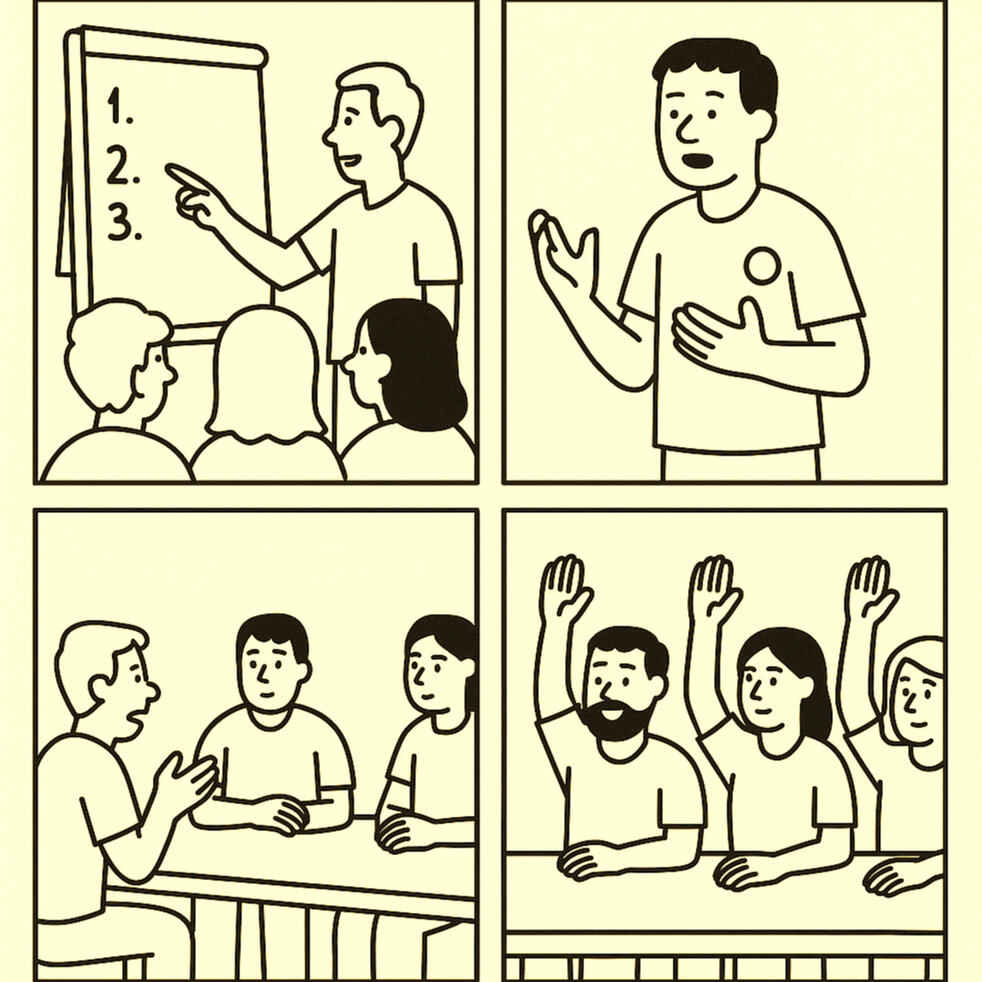
Youth Parliament
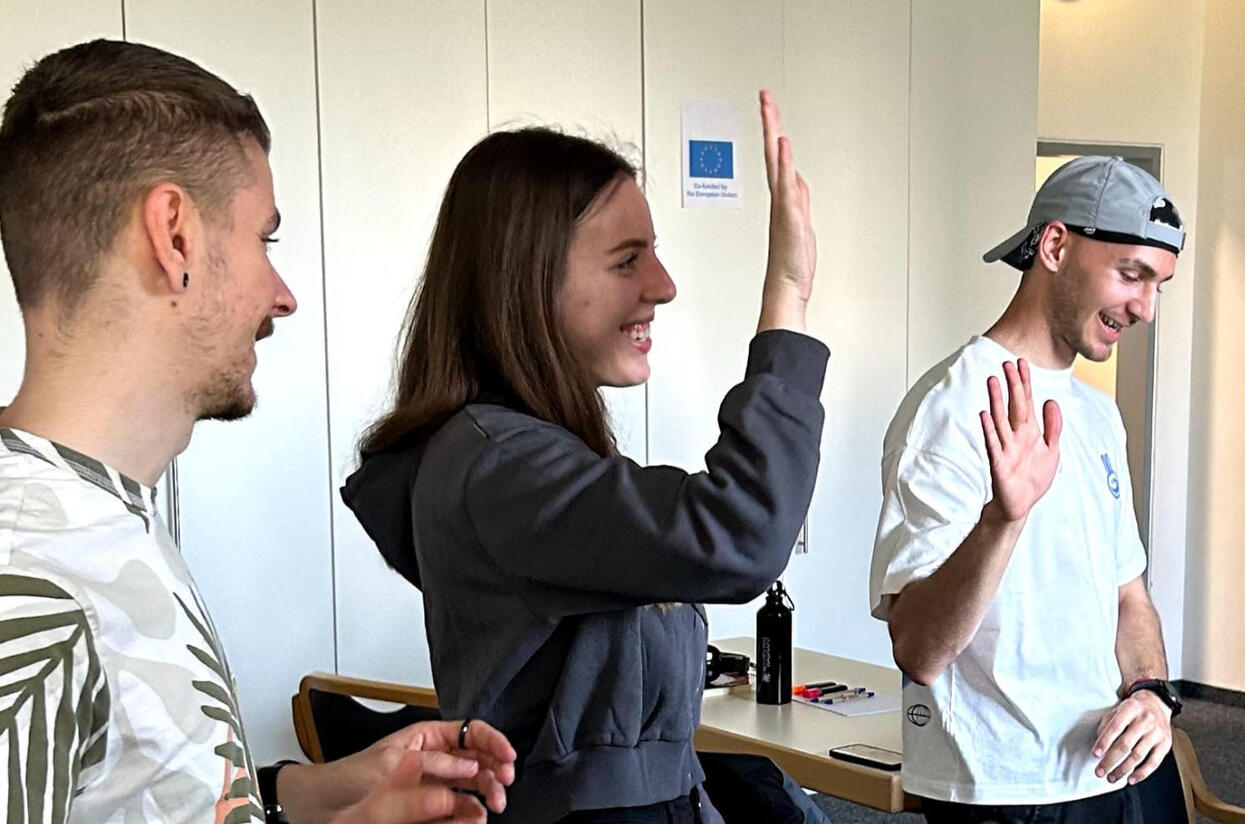
Materials:
Tables, chairs, podiums (optional)
Steps:
- Two participants present arguments (at podiums if available).
- Jury (rest of group) listens carefully.
- Jury votes or decides.
Tips:
Encourage respectful listening and strong voice projection.
Outcomes:
Public speaking, democratic practice, decision-making.Time:
60 minutes
Party Campaigning
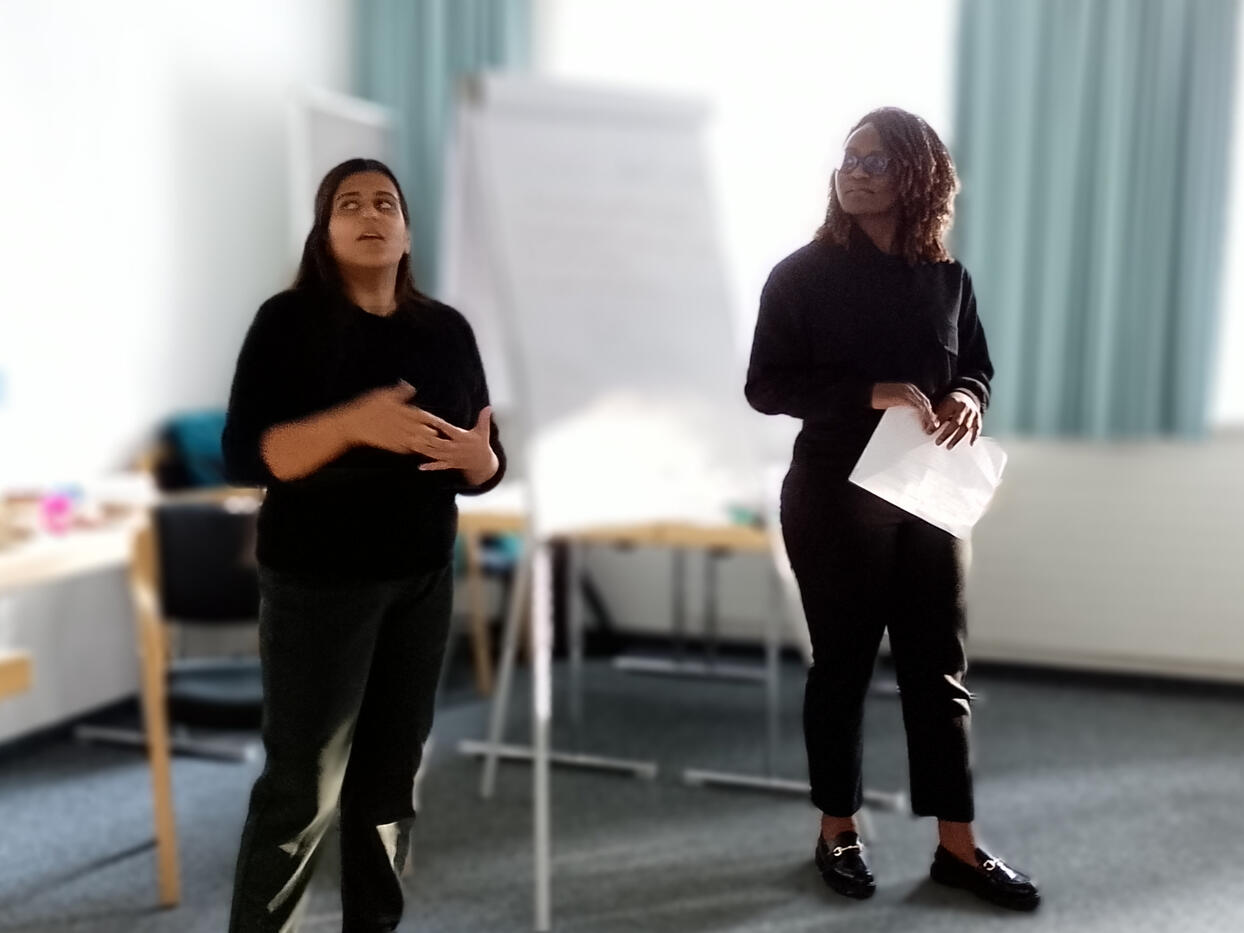
Materials:
(A3) Paper, pencils, tables, chairs
Steps:
- Participants form groups (max. 4)
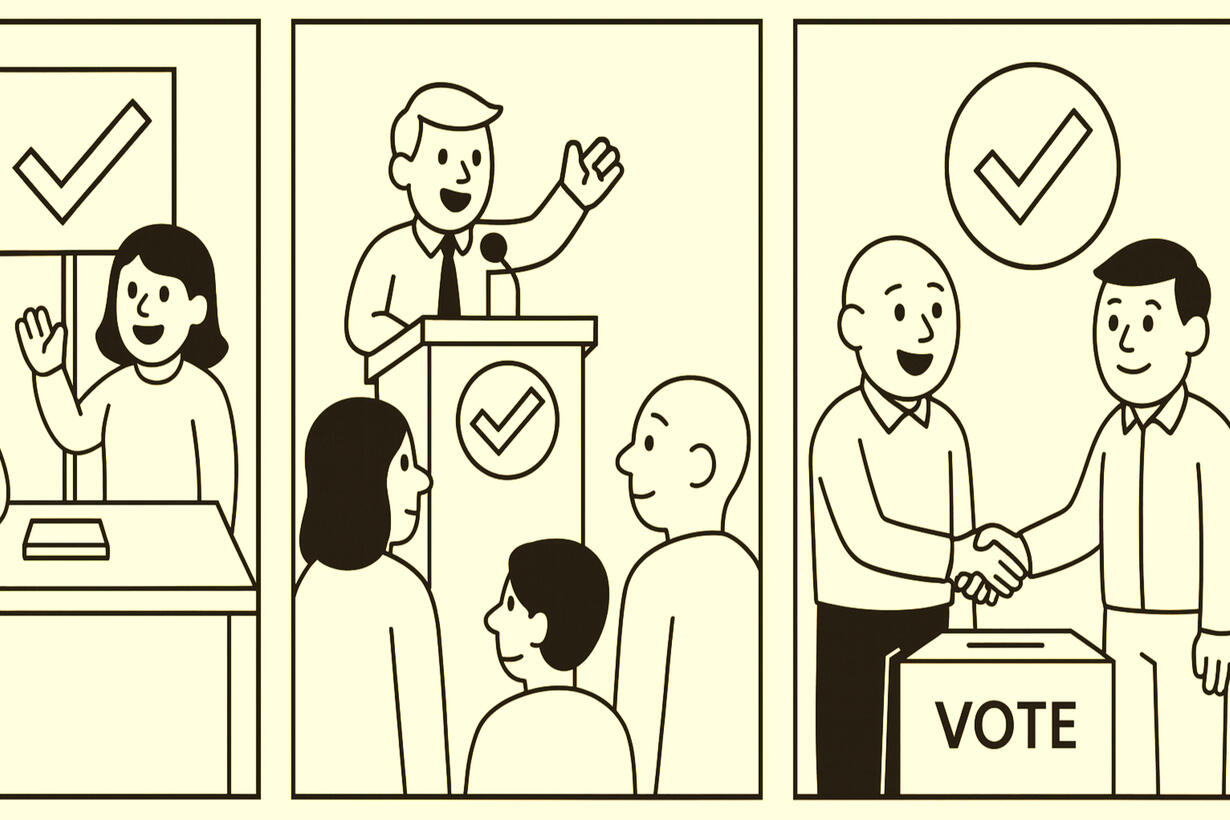
- Each group designs a political party (name, program, aim) and presents their party to others
- Hold a simulated election (voting)
Tips:
Encourage creativity in party identity and messaging; use limited time to force prioritization
Outcomes:
Understanding electoral mechanics, communication, teamwork, persuasion skills, and critical thinking about political messagingTime:
90-120 minutes
Erasmus+ Small Scale Partnership
Project Number 2024-1-AT01-KA210-YOU-000245743
Part C: Media Literacy
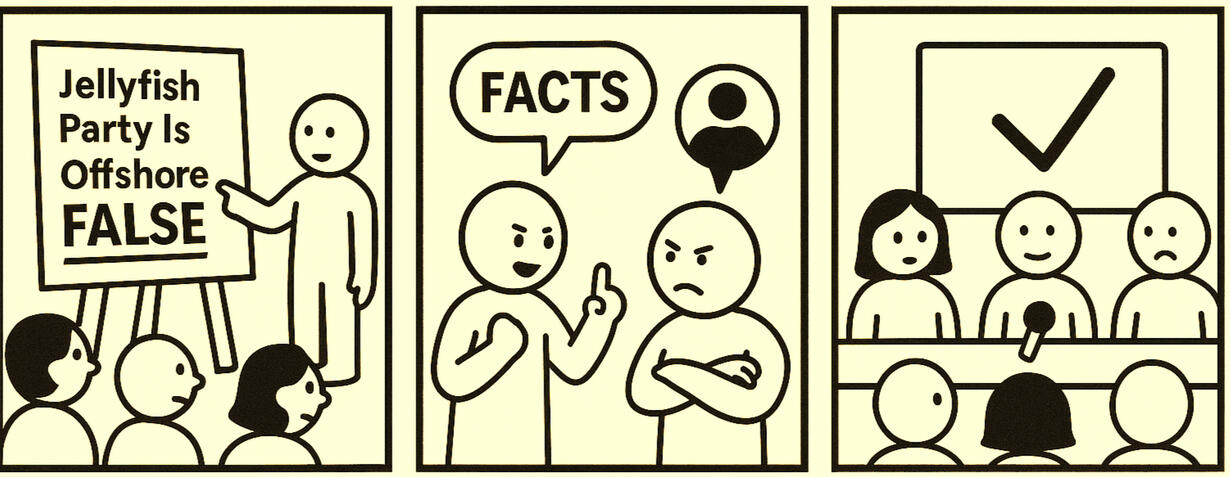
Fake News Show
Materials:
Optional microphone
Steps:
- Person enters and gives exaggerated slogan.
- Delivers surreal headline as press conference.
- Audience reacts dramatically with boos/cheers.
Tips:
Encourage dramatic gestures and confidence.
Outcomes:
Understanding fake news, media literacy, rhetoric skills.Time:
30 minutes
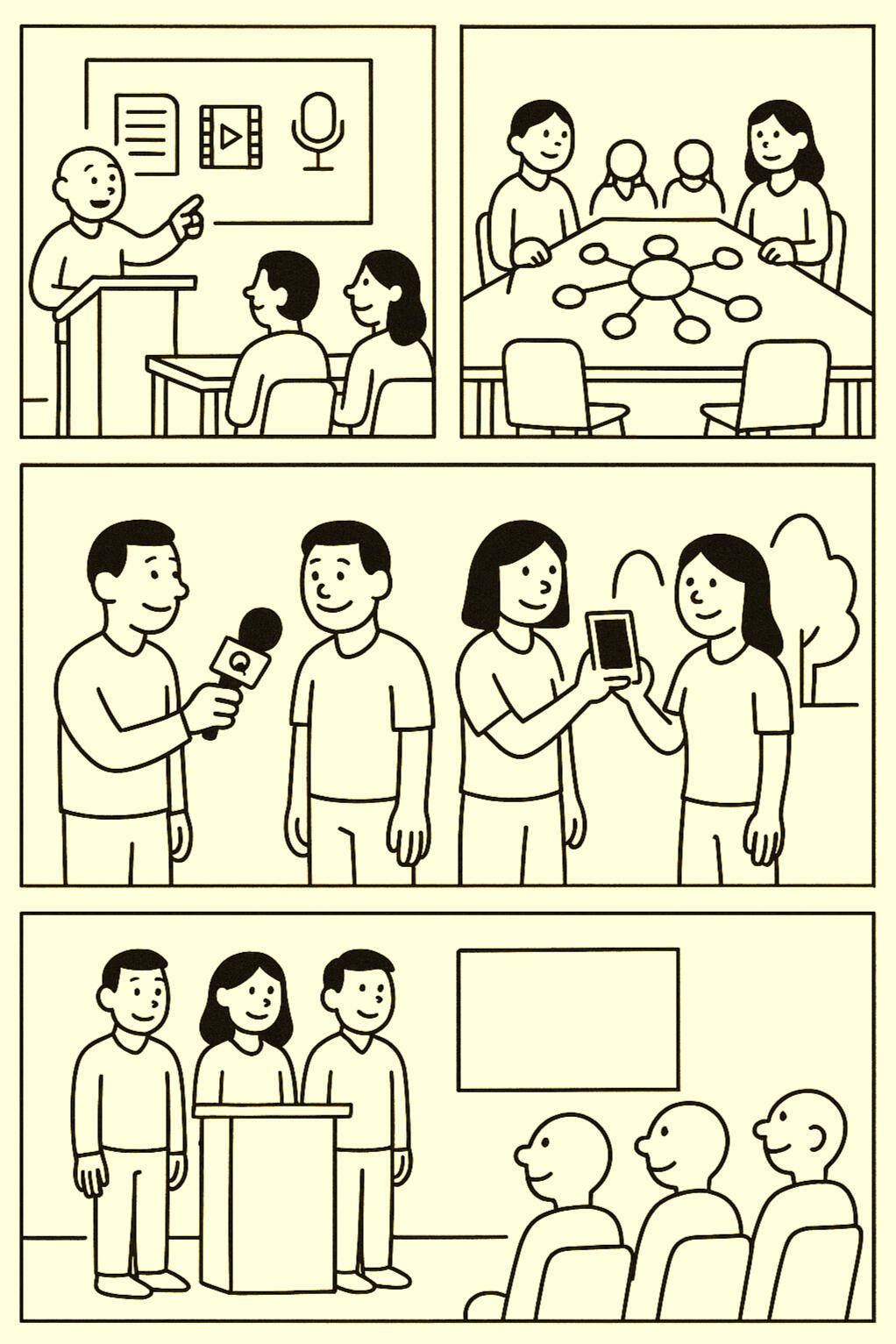
Media Lab
Materials:
Tables, chairs, paper, pens;
Optional: projector, phones/cameras, laptops.
Steps:
- Form small teams.
- Choose a topic and prepare 5+ questions.
- Take notes or record 2–4 short interviews with phone/camera.
- Write a short article and/or make a short video.
- Present to the group.
Tips:
Keep interviews short. Encourage creativity. Max. one device per group.
Outcomes:
Article, video, teamwork, media and critical thinking skills.Time:
120 minutes
Erasmus+ Small Scale Partnership
Project Number 2024-1-AT01-KA210-YOU-000245743
Bonus: Daily Choices for functional life
Daily Choices for a functional lifeA group game about financial literacy and wellbeing
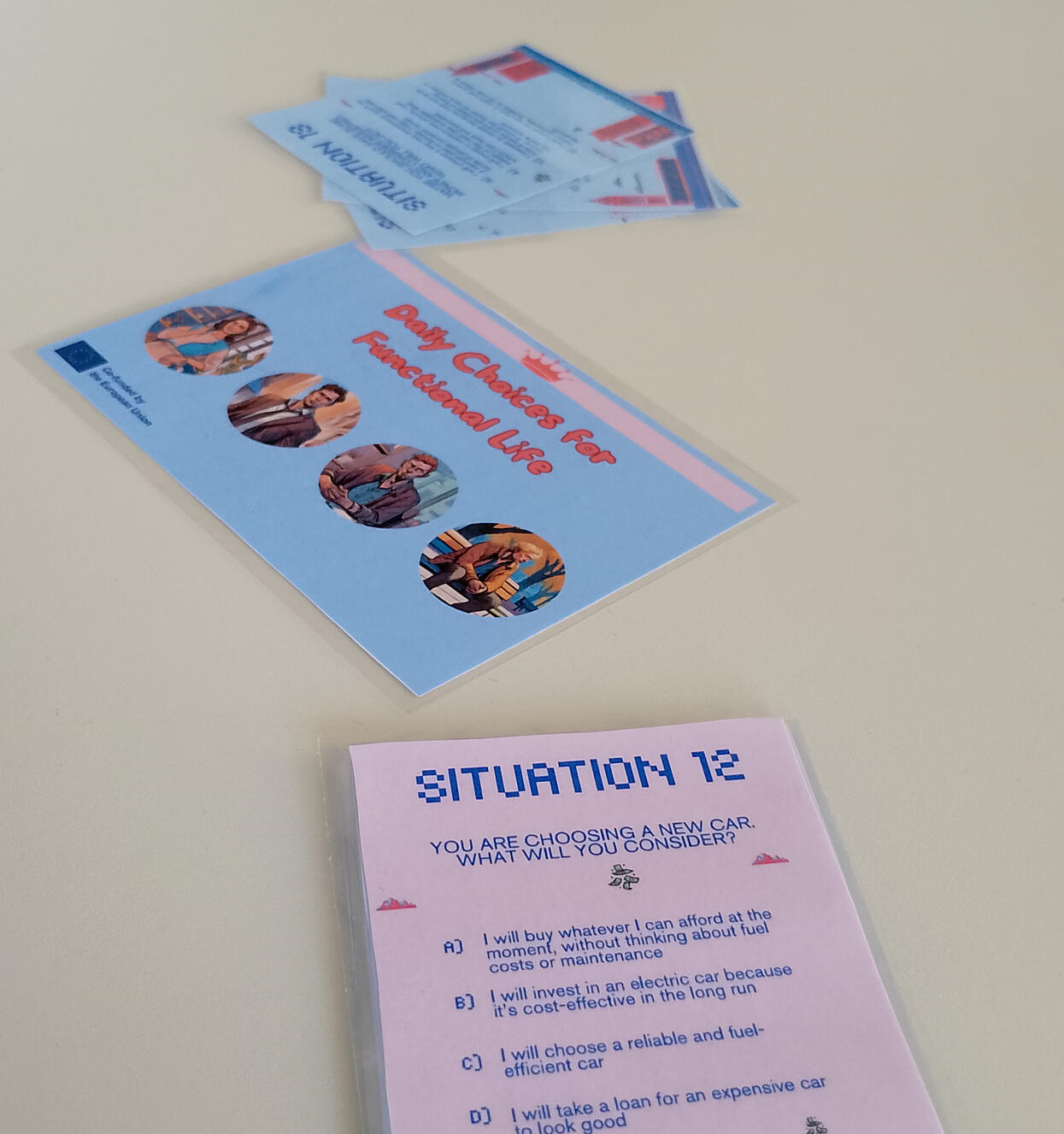
Materials:
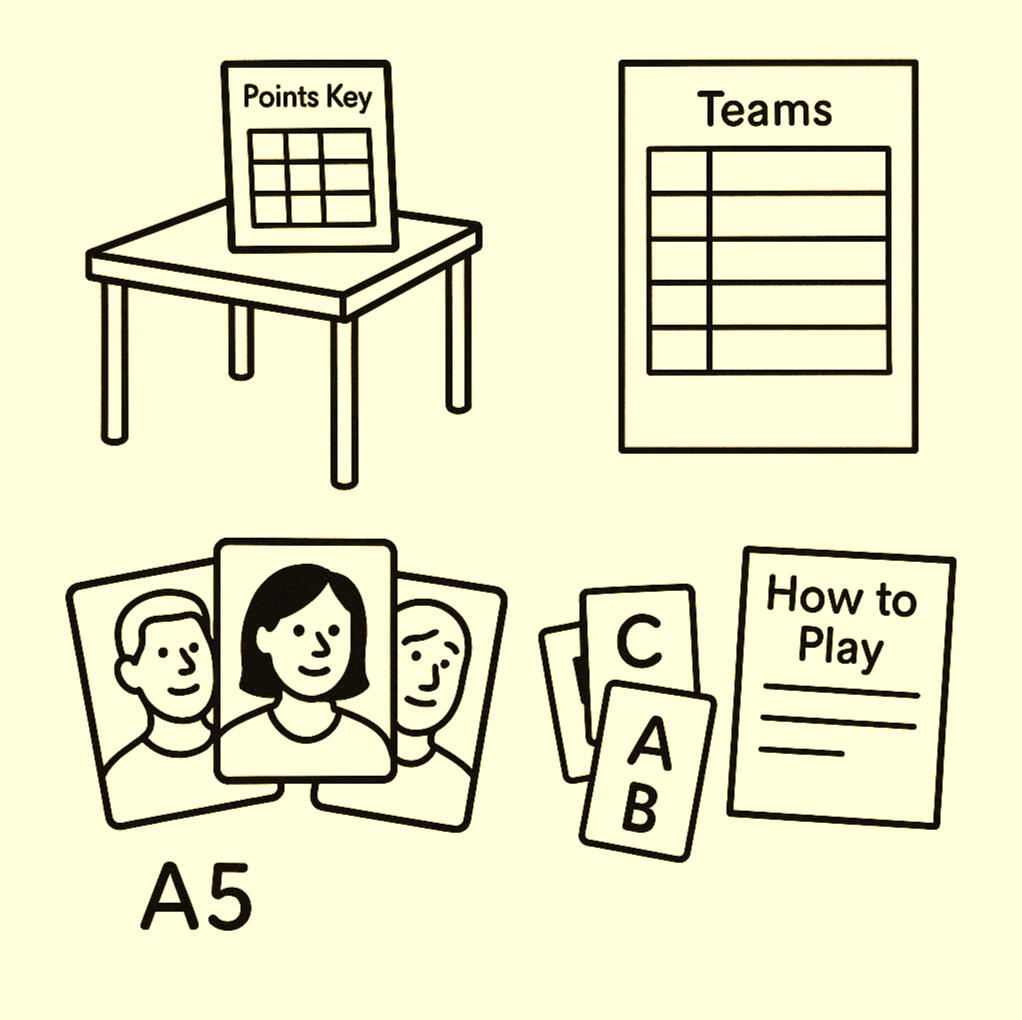
Markers, paper, pens, flipchart (optional)To print (please follow the Downloadlink):
Points Key Desk & Teams Score Sheet
A5 Characters
A6 Cards & How to Play
Tool description
Steps:
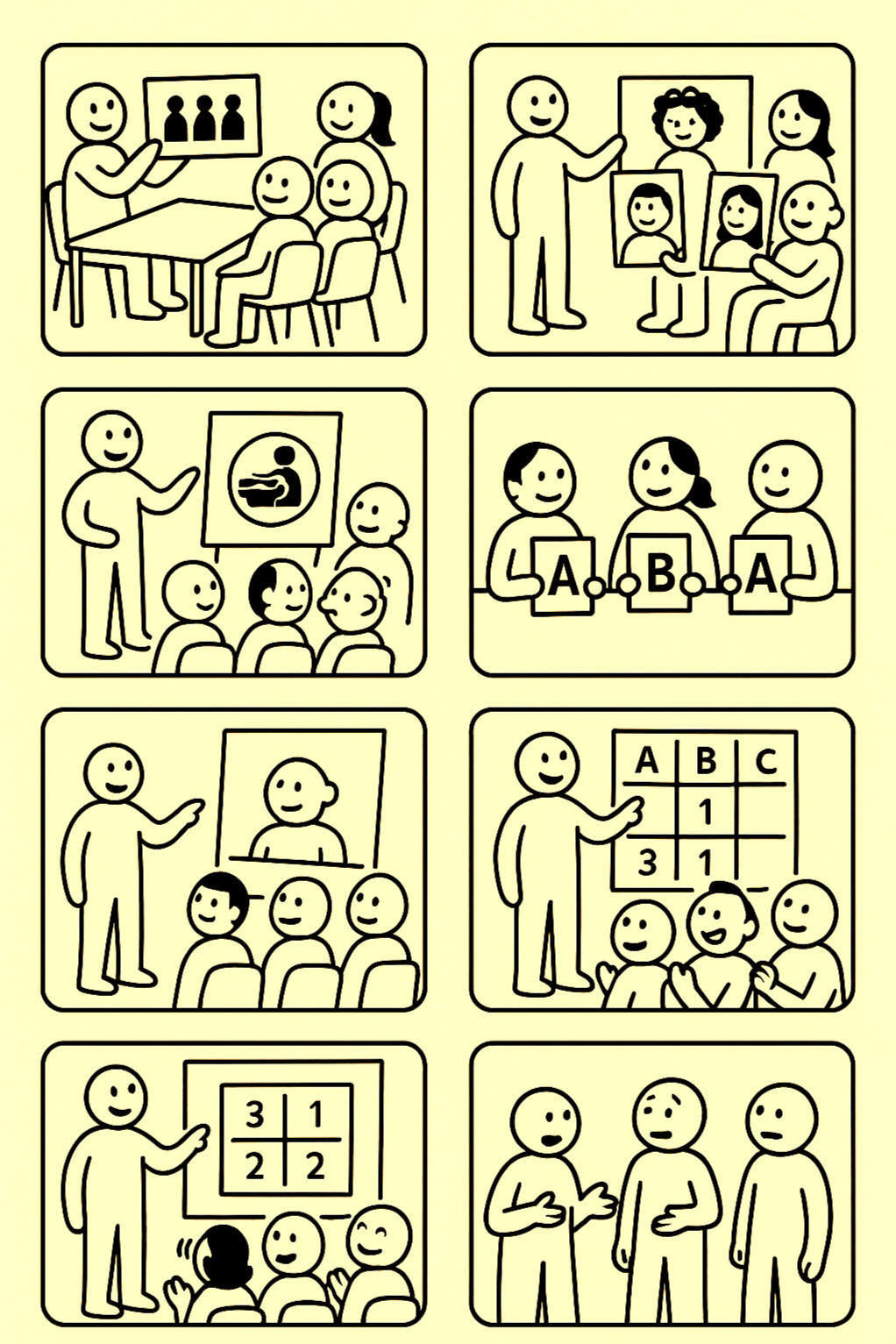
- Divide participants into 4 teams; give each a character card.
- Explain the backstory of the four characters.
- Read situation cards one by one.
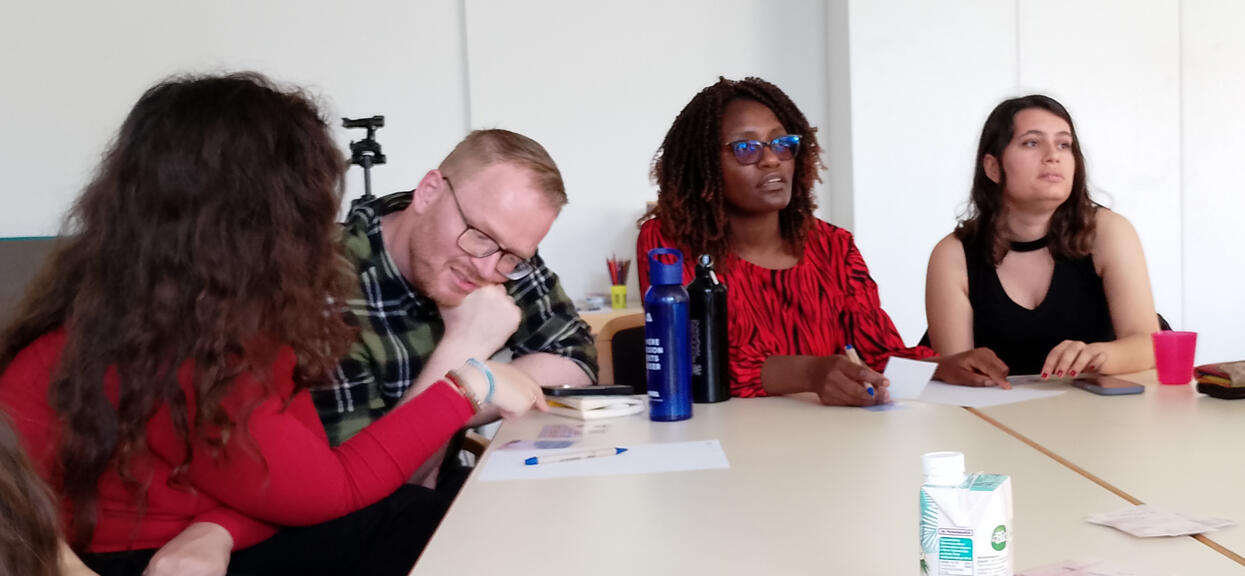
- Teams discuss (1 min) which answer matches their character.
- Teams simultaneously show their answers.
- Facilitator records choices (e.g. on a flipchart) and later awards points via a key.
- After all situations, tally scores, and declare a winner.
- Conduct a reflection / debrief.
Tips:
Encourage participants to “role-play” their character rather than respond personally.
Keep time tight to maintain pace.
Use the flipchart visibly so all can follow score progress.
In debrief, ask how choices aligned or diverged from own values.Outcomes:
Enhanced empathy and perspective-taking
Practice in decision-making under constraints
Improved critical thinking about consequences of small choices
Skills in teamwork, discussion, reflection, and scoring systems.Time:
90+ minutes
Erasmus+ Small Scale Partnership
Project Number 2024-1-AT01-KA210-YOU-000245743
What is it?
Minimal & Functional uses very simple tools to create strong learning and participation experiences.How to use the Minimal & Functional Youth Work Concept:
Print, prepare, and follow the steps.
About the project behind
Three partners, three activities, one goal:
simple, minimal & functional tools for youth work
🌍🇧🇬 OWN IT! —
Own your voice, story and budgetCollection of innovative youth work practices in BulgariaSofia, Bulgaria
16-20 January 2025
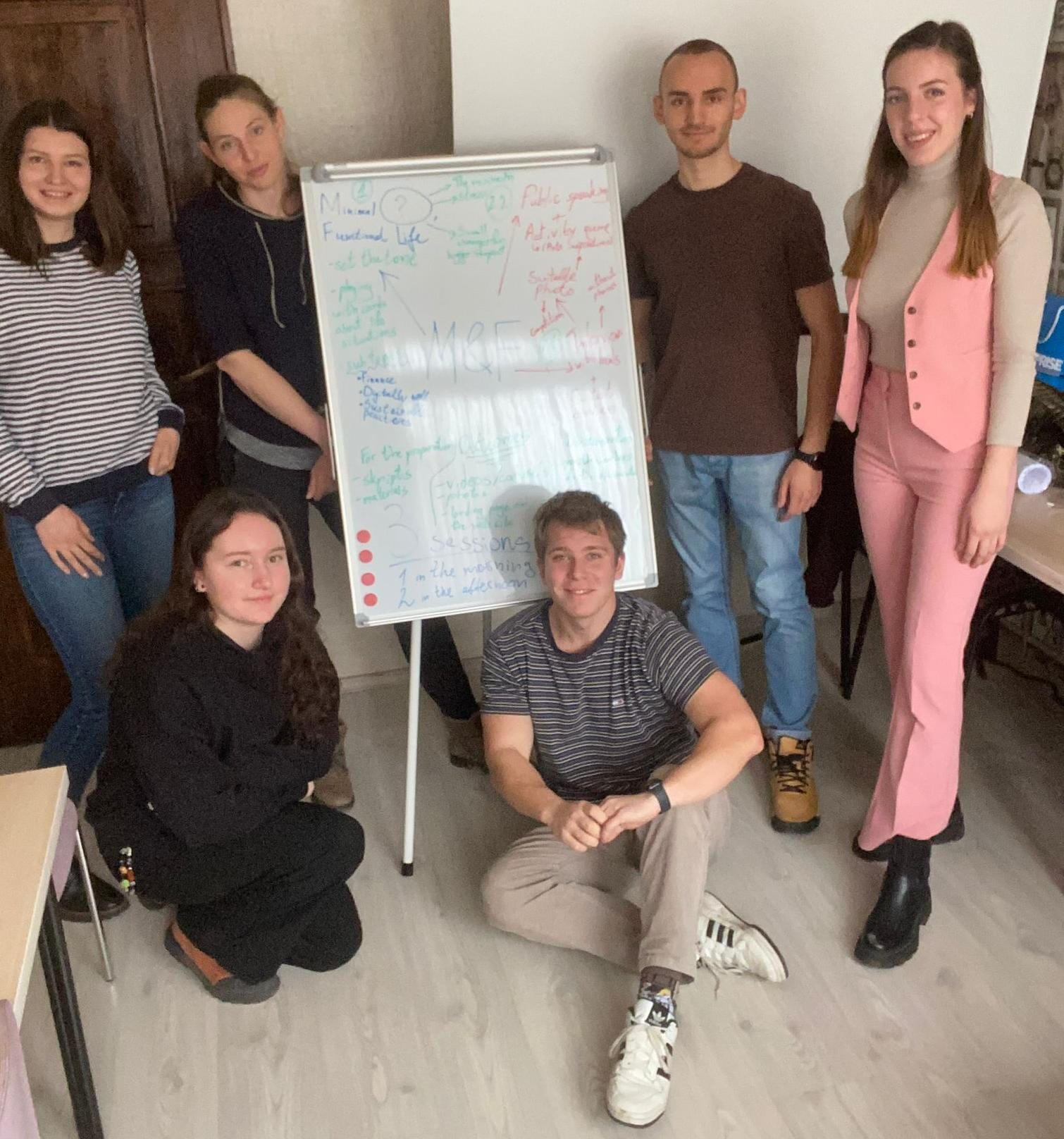
Our first transnational activity under the Minimal & Functional project!For three intense days (plus two travel days), the representatives of the three partner organisations from Austria, Bulgaria, and Czechia came together to learn, test, and share innovative ways of empowering young people. From media storytelling with sCool Media and public speaking with Kristiyan Pashov, to financial literacy games by WalkTogether and the Climate Fresk workshop by ManEco Foundation, we explored how to make learning practical, fun, and functional.This exchange set the stage for our next steps for our upcoming M&F Toolbox in Brno and Linz.
🌟🇨🇿 “Do It! – Get out of your "comfort" zoneCollection of qualitative youth work practices in CzechiaBrno, Czechia
20-24 February 2025
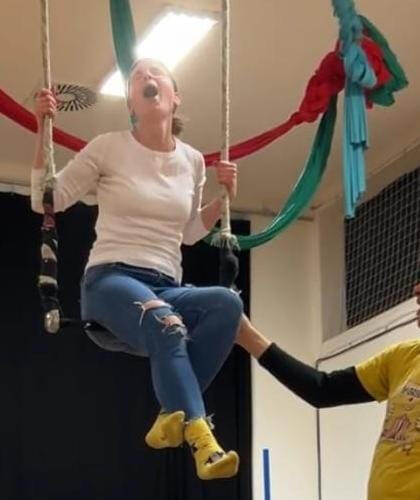
Our second transnational meeting under the Minimal & Functional project got real in Brno, Czech Republic. We toured interesting organisations: at Eurocentrum Brno we saw youth-driven initiatives like Speak Dating & Pub Quiz; at Circus Le Grando we pushed comfort zones with juggling, trapeze and nail-walking (yes, literally); day two was all about mindfulness with techniques like Body Scan and “Be a Bee”; and we wrapped up at Brno For You exploring inclusion via escape boxes and VR sets.
🌟🇦🇹 “Trial & Youth Lab” – Linz, AustriaLearning Teaching Training ActivityLinz, Austria
01-07 April 2025
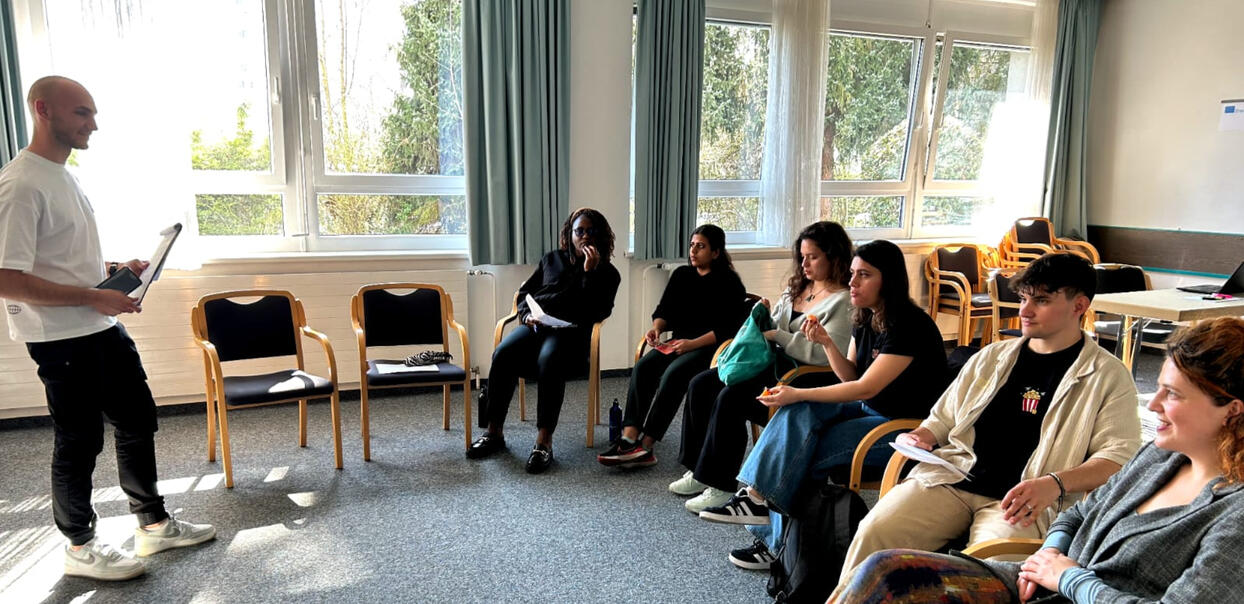
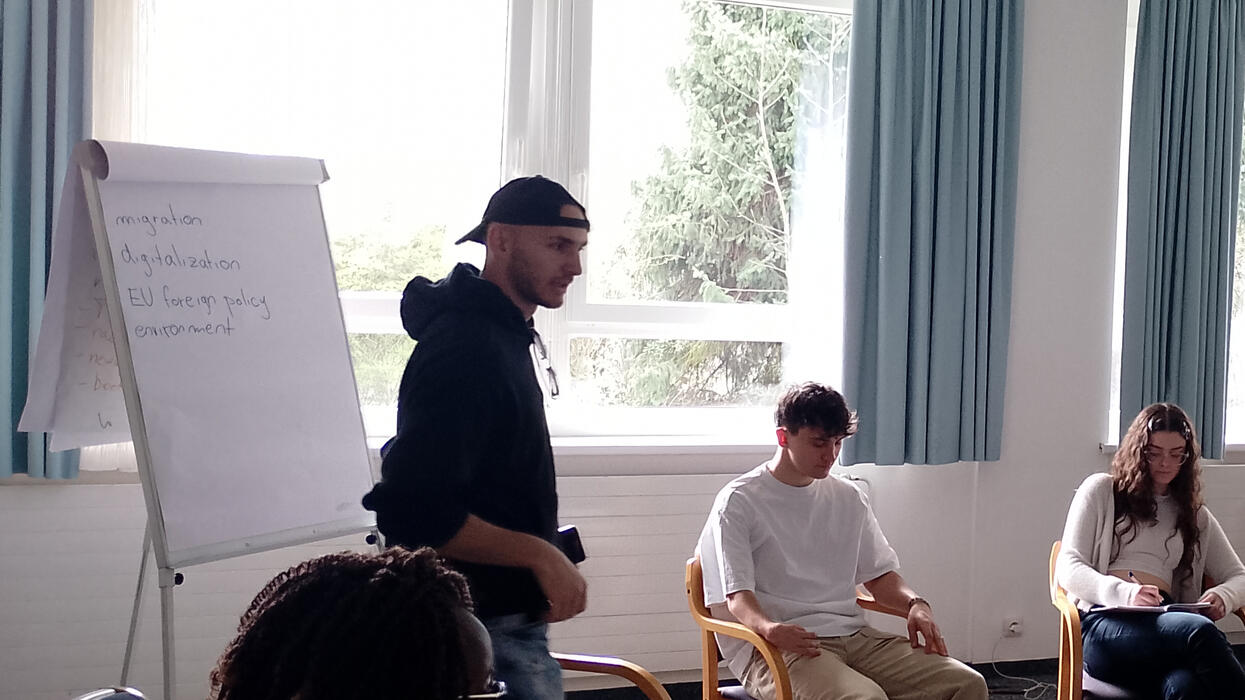
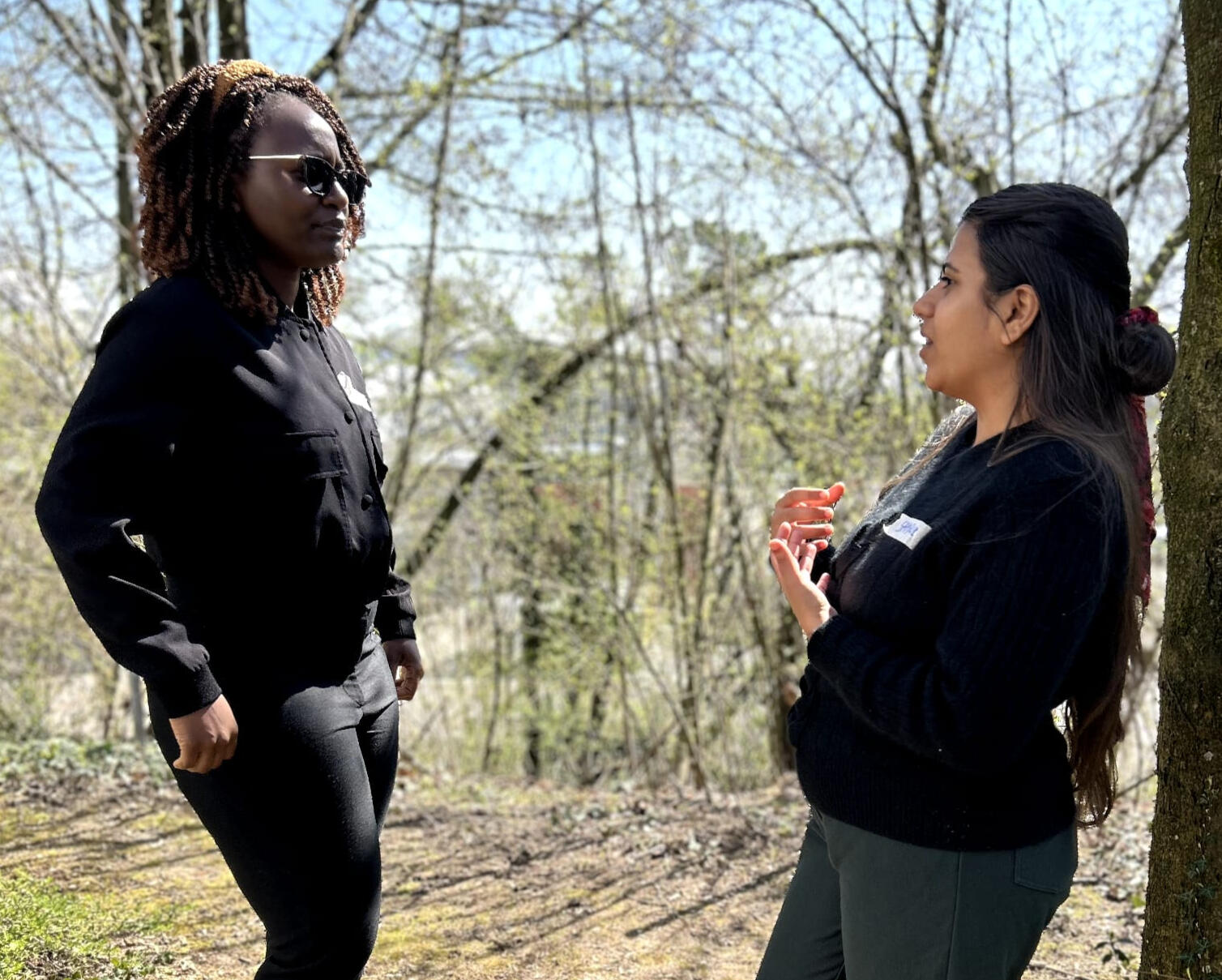
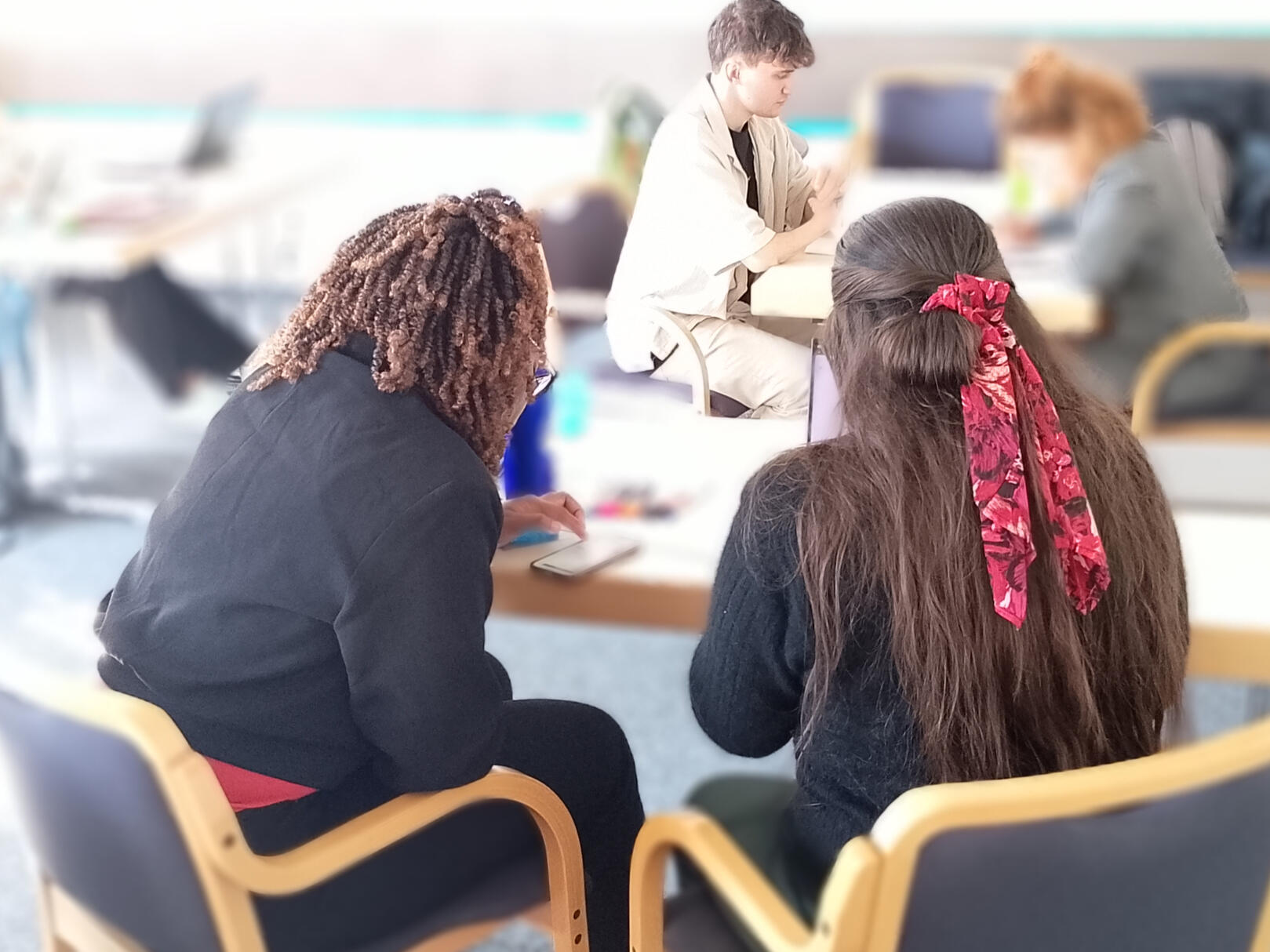
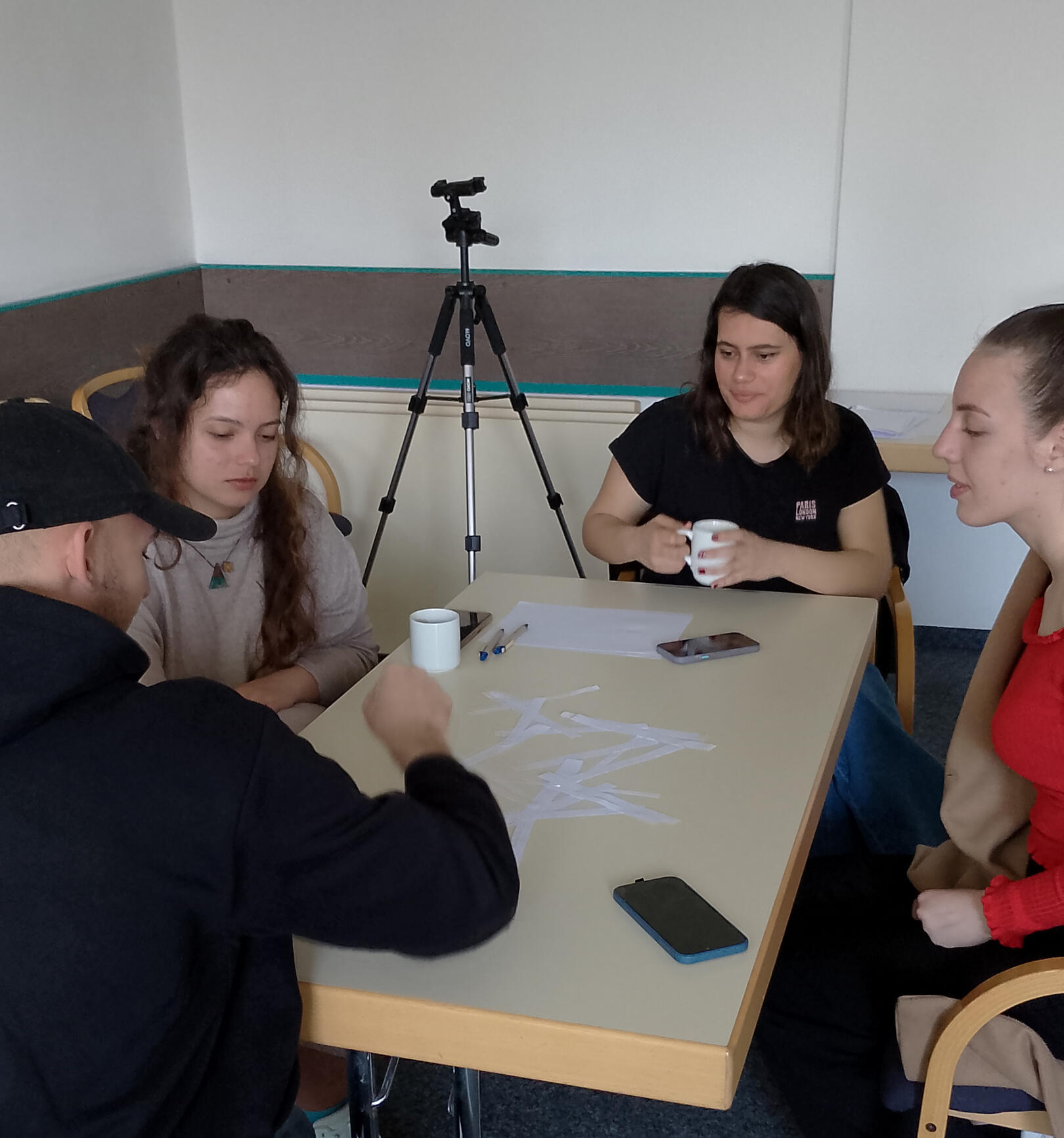
The LTTA Austria “Trial & Youth Lab” gathered young people and youth workers with different backgrounds situated in Austria plus the representatives of the three partner organisations to explore, test, and refine practices collected in the previous activities in Sofia, Bulgaria and Brno, Czech Republic.Participants engaged in workshops, discussions, and practical exercises designed to strengthen skills in facilitation, teamwork, and creative problem solving. The activity was part of the broader Erasmus+ partnership that aims to empower youth and especially NEETs with simple, adaptable tools.Aims and Activities
The programme combined structured workshops with experiential learning moments. Sessions focused on storytelling, improvisation and play, campaigning, mindfulness, and expression. Trainers introduced a variety of ice-breaking and improvisation games, creating a safe environment where participants could connect across cultures and backgrounds. The atmosphere encouraged experimentation, allowing everyone to try out different facilitation roles and observe varied approaches in action.Participants' Reflections
When asked about their preparedness, participants shared mixed but constructive impressions:
Some felt they had collected a valuable set of improvisation games to use in their own practice.
Others said they now had an initial idea of how to structure activities with diverse groups, especially using ice-breakers and team-building methods.
A few felt only partially prepared, noting that they would need to join more projects before feeling fully confident.
Several highlighted that facilitation feels best done together with a team, drawing on shared strengths.
Regarding the effectiveness of the Minimal & Functional approach, reflections were similarly balanced:
Participants appreciated the diversity of backgrounds in the group and the supportive trainers.
Many noted that the concept offers practical tools that can be applied in different contexts, especially in less structured or spontaneous settings.
At the same time, some observed that the overall programme felt loosely connected, with activities not always clearly tied together.
Concerns about sustainability were raised, pointing to the use of single-use paper as not fully in line with the “minimal” principle.
Others emphasised that the strength of the approach lies in simplicity: fewer tools and clear methods can be supportive in a world full of information.
Conclusion
The LTTA Austria offered valuable opportunities for learning, exchange, and growth. It provided a space where youth workers and participants could explore new facilitation methods, gain confidence, and critically reflect on how minimalism and functionality can shape youth work. While the experience revealed areas for improvement in structuring and clarity, it confirmed the potential of the M&F approach to deliver accessible and practical results. The activity enriched the toolbox under development and strengthened cooperation between partners, ensuring the lessons learned will carry forward into future initiatives.
Erasmus+ Small Scale Partnership
Project Number 2024-1-AT01-KA210-YOU-000245743
Contact & Impressum
This Website presents the Minimal & Functional Youth Work Concept, a minimal and functional youth work concept for everyone developed within the Erasmus+ Small Scale Partnership Project Number 2024-2-AT01-KA210-YOU-000245743.It includes activities for young people aged 16 to 29, and it is free to use for everyone.
Project CoordinationVerein MUSE für Kunst, Kultur und Kreativität
[email protected]
www.vereinmuse.eu

PartnersChange, Explore & Grow Association
[email protected]
www.cegeassociation.org
European Youth Centre Břeclav z.s.
[email protected]
www.eycb.eu

Disclaimer
Funded by the European Union. Views and opinions expressed are however those of the author(s) only and do not necessarily reflect those of the European Union or OeAD-GmbH. Neither the European Union nor the granting authority can be held responsible for them.
Erasmus+ Small Scale Partnership
Project Number 2024-1-AT01-KA210-YOU-000245743
Privacy Policy
Last updated: October 2025
Website: https://minimalandfunctional.euController: Verein MUSE für Kunst, Kultur und Kreativität (V-MUSE)
OID: E10347306 | PIC: 880207974
Registered in Austria1. Data ControllerThe controller responsible for processing personal data through this website is:Verein MUSE für Kunst, Kultur und Kreativität
4040 Linz
Email: [email protected]
Website: https://minimalandfunctional.eu2. Purpose of ProcessingWe process personal data only to:Provide access to project information and materialsRespond to messages sent via contact forms or emailMeet basic legal and reporting obligations under EU programmes (e.g. Erasmus+)Ensure technical security and performance of the website3. Categories of DataDepending on user interaction, we may process:Identification data voluntarily provided (e.g. name, email)Technical data (e.g. IP address, browser type, access time) collected automatically for security and statistics4. Legal BasisProcessing is based on:Art. 6(1)(a) GDPR – Consent (voluntary contact)Art. 6(1)(f) GDPR – Legitimate interests (website security, minimal analytics)Art. 6(1)(c) GDPR – Legal obligations related to EU-funded projects5. Data RetentionWe store data only as long as needed:Contact form messages: up to 12 monthsTechnical logs: up to 30 days for securityProject data: until the end of the project plus legally required retention6. Cookies and AnalyticsThis website uses only functional cookies and, where applicable, basic anonymised analytics.
No tracking or marketing cookies are used.
You can disable cookies through your browser settings.7. Data SharingWe do not sell or trade personal data. Data may be shared only with:Project partners within the Erasmus+ programme (EU/EEA)Technical service providers (hosting, security) under GDPR-compliant agreementsNational Agencies or the European Commission for mandatory project reporting8. International TransfersNo personal data is transferred outside the EU/EEA. If this changes, appropriate safeguards will be applied.9. Your RightsUnder the GDPR, you have the right to:Access your dataRectify inaccuraciesRequest deletion (“right to be forgotten”)Restrict or object to processingWithdraw consent at any time (without affecting prior lawful processing)To exercise these rights, contact us at [email protected].
You also have the right to lodge a complaint with the Austrian Data Protection Authority (Datenschutzbehörde).10. SecurityWe apply appropriate technical and organisational measures to protect data from unauthorised access, alteration, or loss.11. UpdatesThis policy may be updated when necessary. The latest version is always published on this page with the corresponding date.
Erasmus+ Small Scale Partnership
Project Number 2024-1-AT01-KA210-YOU-000245743
Text